

Reviving the Space Beneath Your Feet: A Guide to Basement Finishing
By Robert Smith Founder & Residential Designer, Fresh Start Designs
In Pennsylvania, we are blessed with homes that have character—from the historic stone farmhouses in Phoenixville to the sprawling new builds in the surrounding suburbs. But there is one asset in these homes that is almost universally undervalued: the basement.
For over 30 years, I have walked down creaky stairs into dark, cluttered basements and seen potential where others see only storage bins and cobwebs. At Fresh Start Designs, our philosophy is that form follows function. Your home should not just look good; it should work for you. Finishing a basement is often the most cost-effective way to add significant square footage to your life without changing the footprint of your home.
However, a basement finish is not just a coat of paint and some carpet. It requires a specific mindset and careful planning to ensure you aren’t just building a "nice cellar," but a true extension of your home.
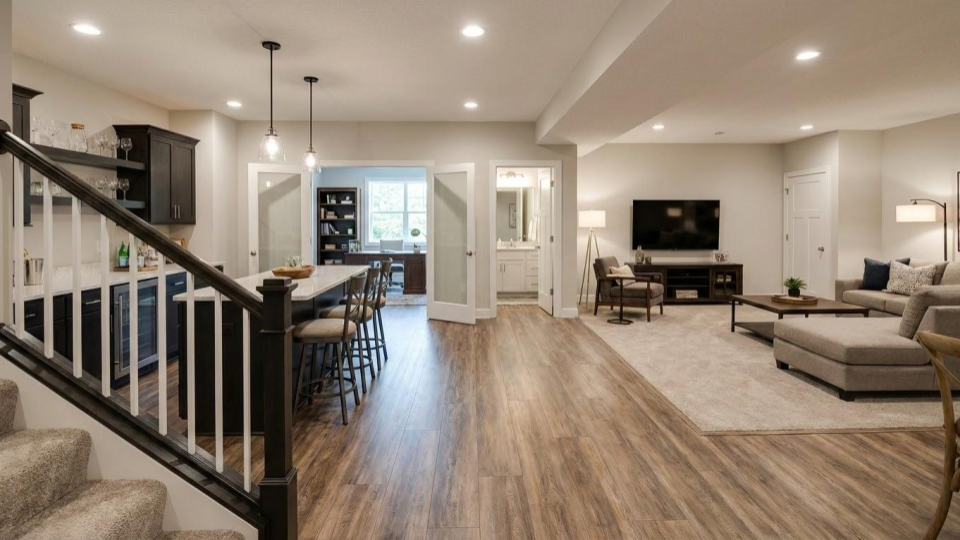
The Planning Phase: What to Think About Before You Build
Before we fire up our 3D modeling software to show you what your space could be, we need to address what the space is. Here are the critical factors every homeowner needs to consider:
1. Water Management is Non-Negotiable
In Pennsylvania, we deal with humidity, rain, and freeze-thaw cycles. Before you put up drywall, you must ensure the foundation is bone dry. If you have even a hint of dampness, we need to address it with French drains, sump pumps, or dehumidification systems first. Covering up a moisture problem with insulation is a recipe for mold, not a man cave.
2. Respect the Mechanicals
Basements are the "lungs" of the house—they hold the HVAC, water heater, and electrical panels. In our design phase, we plan around these. We can hide unsightly ductwork in soffits or "bulkheads," but we need to do it strategically so we don't chop up the ceiling height in high-traffic areas. We want the room to feel open, not like an obstacle course.
3. Lighting: The Anti-Dungeon Effect
The biggest difference between a basement and a living room is natural light. We need to manufacture that warmth. I always advise planning for more lighting than you think you need. We use recessed lighting to keep the ceiling feeling high, but we layer it with sconces or pendants to add warmth.
4. Egress and Safety
If you plan to have a bedroom down there, Pennsylvania code requires an egress window (a window big enough to climb out of in an emergency). Even if it’s just a rec room, an egress window adds immense value by bringing in natural light and making the space feel less subterranean.
5 Top Things to Add to Your Project
When we sit down to draft your design, I always look for elements that offer the highest return on investment—both financially and in quality of life.
1. A Full (or 3/4) Bathroom If you are spending time downstairs, you do not want to run upstairs every time nature calls. Adding a bathroom makes the basement a self-sufficient suite. It is invaluable for guests and increases resale value significantly.
2. A "Flex" Room Avoid hyper-specializing every square foot. Create a room with doors that can serve as a home office by day, a guest bedroom by night, or a gym in the future. Flexibility is the key to longevity in home design.
3. Luxury Vinyl Plank (LVP) Flooring I love wood, but in a basement, LVP is king. It is waterproof, durable, warm underfoot, and looks incredibly realistic. If a pipe bursts or the sump pump fails, carpet is ruined; LVP can often be dried out and saved.
4. A Wet Bar or Kitchenette You don’t need a second full kitchen, but a wet bar with a beverage fridge, a sink, and some cabinetry changes the way you entertain. It keeps the party downstairs and saves you from hauling drinks up and down the stairs.
5. Dedicated Storage Zone Do not finish 100% of the basement. You still need a place for holiday decorations and suitcases. I recommend framing out a dedicated, unfinished mechanical/storage room with sturdy shelving. It keeps the finished areas clutter-free.
What to Pass On (The "Rethink" List)
Not every trend is worth the money. Here is where I usually suggest clients save their budget:
The Massive Home Theater: Ten years ago, everyone wanted tiered seating and a projector. Today, families prefer open "media zones" with a large sectional and a wall-mounted 85-inch TV. It’s more social and doesn't lock the room into a single use.
Wall-to-Wall Carpet: As mentioned above, basements are prone to moisture. Carpet traps dust, allergens, and moisture. Stick to hard surfaces and use area rugs for warmth.
Elaborate Wood-Burning Fireplaces: Adding a masonry chimney to an existing basement is astronomically expensive. If you want ambiance, opt for a high-quality electric or direct-vent gas fireplace unit instead.
Drop Ceilings (Acoustic Tiles): Unless you absolutely need constant access to pipes everywhere, avoid the commercial office look. Drywall ceilings look more like a "real" room. We can add access panels exactly where we need them.
The "Man Cave" Theme: Avoid over-theming (like building a fake Irish Pub). Styles change. Build a beautiful, neutral bar area that can be styled with decor, rather than permanently built into the architecture.
Let’s Visualize Your Fresh Start
At Fresh Start Designs, we don't just guess how it will look—we show you. We use advanced 3D modeling to let you "walk through" your finished basement before a single hammer is swung. We want to ensure that the symmetry, balance, and flow feel right to you.
Your basement is waiting to be revived. If you are in Phoenixville, Chester County, or the surrounding Philadelphia suburbs, let’s sit down and look at the possibilities.
Ready to start?

Robert Smith
FRESH START DESIGNS
Founder | Owner | Residential Designer