

Countertop Confidential: Choosing the Right Surface for How You Actually Cook
By Robert Smith Founder & Residential Designer, Fresh Start Designs
In my thirty years of designing homes across Pennsylvania and the Carolina’s, I’ve learned that the kitchen is the only room in the house where "form follows function" isn't just a philosophy—it’s a survival strategy.
When we sit down to design a kitchen, my first question is never "What color do you want?" It is always: "How do you cook?"
Are you a baker who needs a cold surface for rolling dough? Are you a "clean-as-you-go" chef, or do you leave the tomato sauce on the counter overnight? Do you have teenagers who will inevitably put a hot skillet directly on the island?
Your countertop is the workhorse of your home. Picking the right one means balancing your aesthetic goals with the reality of your daily life. Below is an in-depth guide to the materials we see most often, along with my candid take on which ones will survive your kitchen.
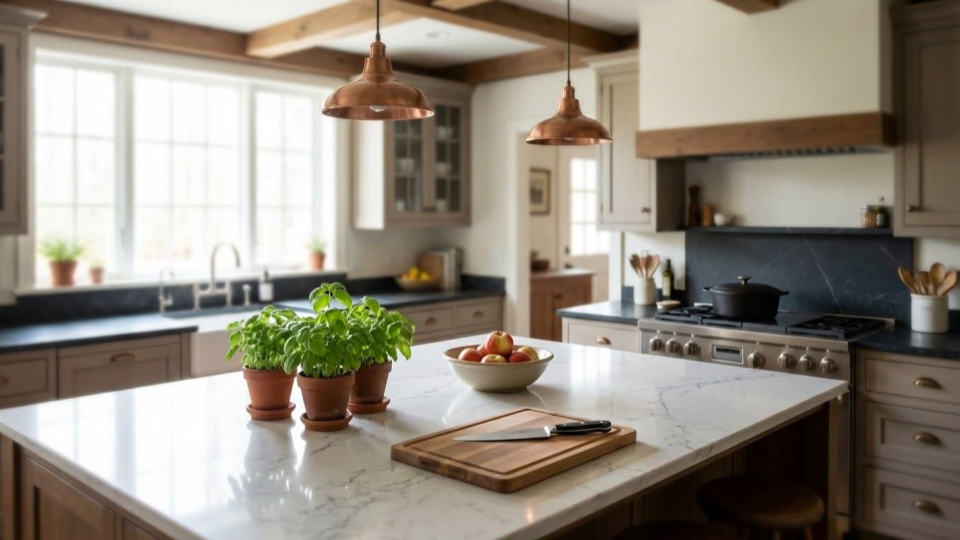
The Contenders: Materials, Pros, Cons, and Costs
1. Engineered Quartz
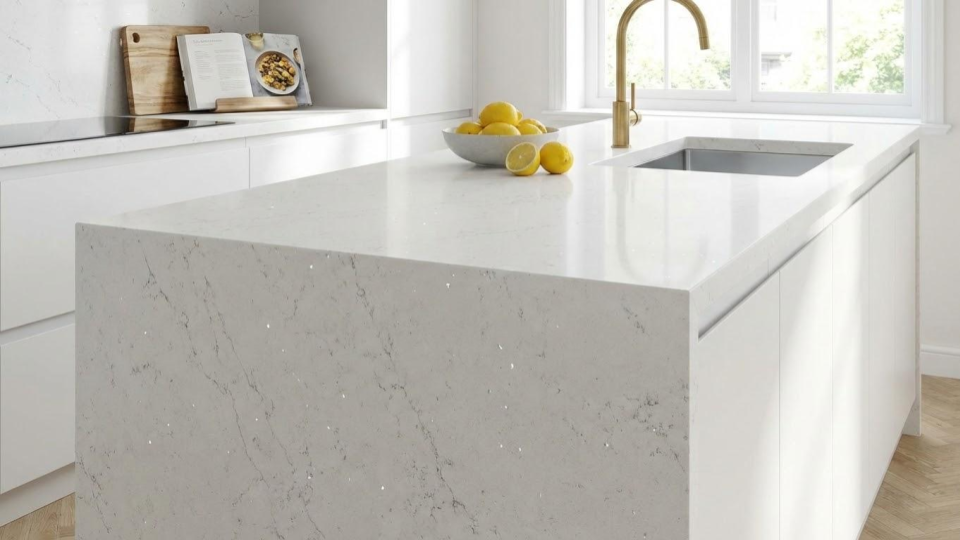
Currently the reigning king of kitchen renovations. It is a man-made product combining roughly 90% ground natural quartz with 10% polymer resins.
Best For: The busy family, the messy cook, and anyone who wants low maintenance.
Pros: Non-porous (antibacterial), no sealing required, highly resistant to stains and scratches. Consistent patterns.
Cons: Not heat proof—resins can melt or discolor if you set a hot pan down (trivets are mandatory). Can look "manufactured" compared to natural stone.
Approx. Cost: $50 – $120 per sq. ft. installed.
2. Granite
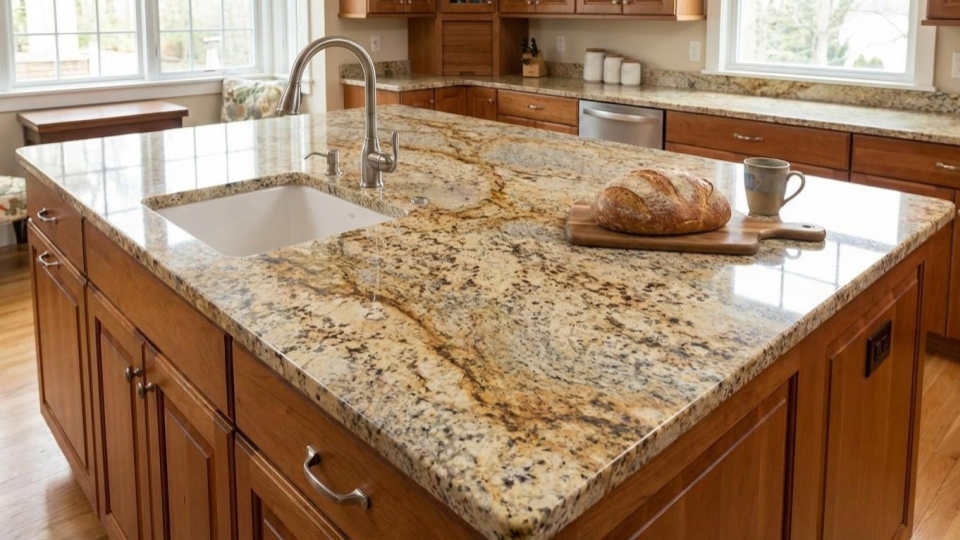
The classic natural stone choice. Each slab is unique, mined from the earth, cut, and polished.
Best For: The "hot pot" chef. If you want to take a pan off the burner and set it down without thinking, this is your stone.
Pros: Incredible heat resistance; very hard and scratch-resistant. Adds natural value and character; no two slabs are alike.
Cons: Porous. It requires sealing (usually once a year) to prevent stains. Can crack if hit with a heavy object on a corner.
Approx. Cost: $45 – $100+ per sq. ft. installed (Exotics can go much higher).
3. Marble (Carrara, Calacatta, etc.)
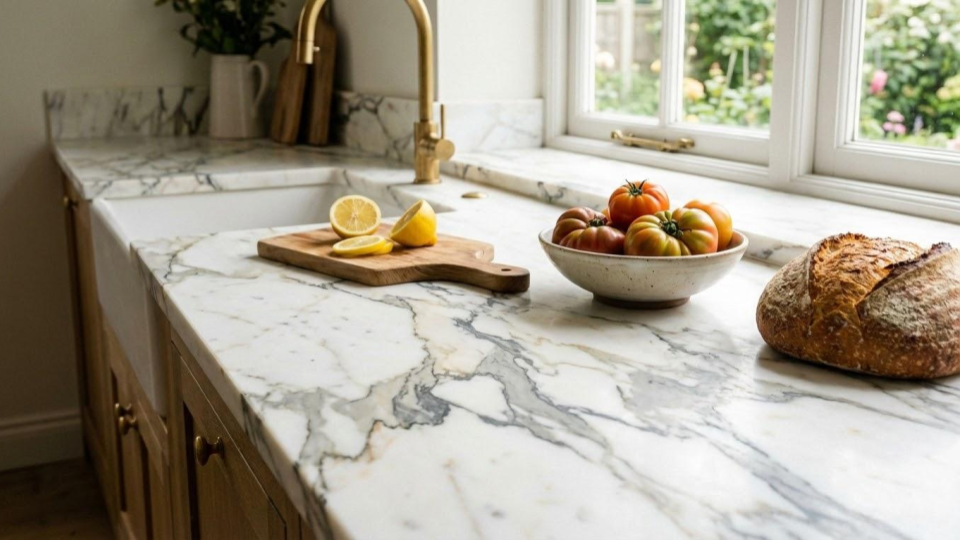
The symbol of luxury. It is a metamorphic rock that is softer and more porous than granite.
Best For: The serious baker. Marble stays naturally cool, making it the perfect surface for rolling out pie crusts and tempering chocolate.
Pros: Unmatched beauty and brightness; develops a "patina" over time that tells the story of your kitchen.
Cons: High maintenance. It will etch (dull spots) if acidic foods like lemon or tomato touch it. It stains easily and scratches softly.
Approx. Cost: $60 – $150+ per sq. ft. installed.
4. Soapstone
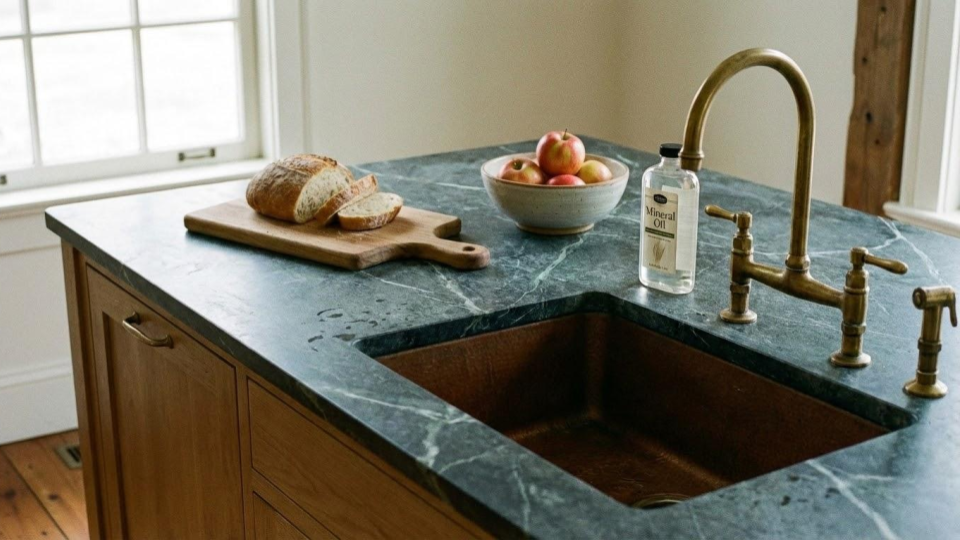
A natural quarried stone with a high talc content, giving it a soft, "soapy" feel.
Best For: The functional chef who loves a rustic or farmhouse aesthetic.
Pros: Completely non-porous (doesn't stain, doesn't need sealing). Impervious to heat/acids. Developing a dark patina is part of the charm.
Cons: Very soft—it scratches and dents easily (though these can often be sanded out). Limited color range (gray to black).
Approx. Cost: $70 – $100 per sq. ft. installed.
5. Quartzite
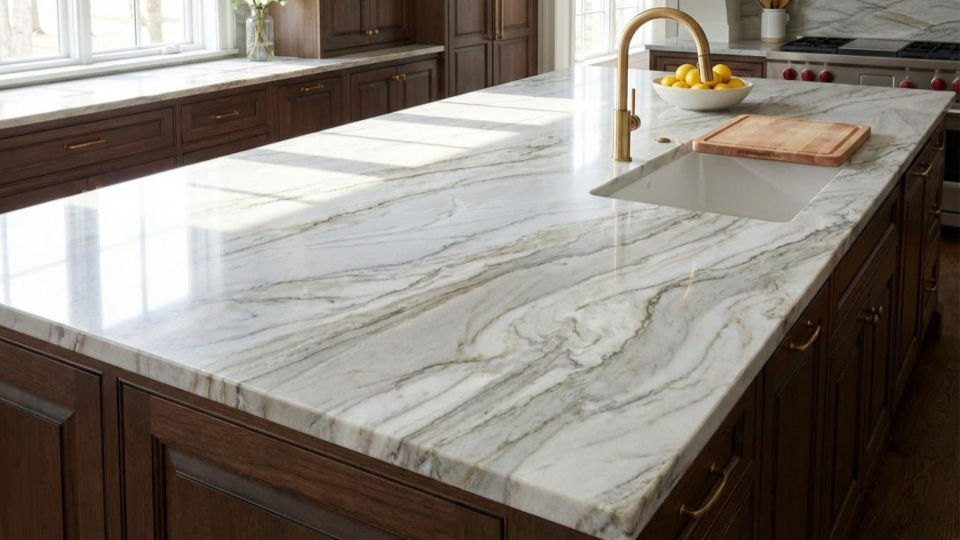
Not to be confused with Quartz. This is a natural stone (sandstone converted to metamorphic rock) that looks like marble but behaves like granite.
Best For: The homeowner who loves the look of marble but needs the durability of granite.
Pros: Harder than granite and glass. UV resistant (good for outdoor kitchens). Stunning, marble-like veining.
Cons: Very expensive. Porous and requires sealing. Because it is so hard, it can be brittle and difficult to fabricate.
Approx. Cost: $80 – $150+ per sq. ft. installed.
6. Butcher Block (Wood)
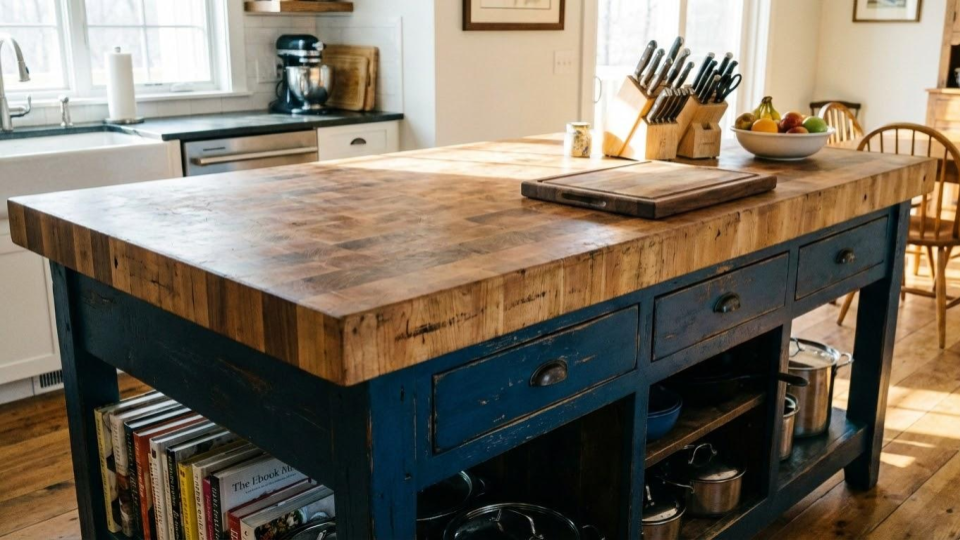
Usually maple, oak, or walnut strips glued together.
Best For: Cutting/chopping stations or warming up a sterile kitchen island.
Pros: The only surface you can cut directly on (if unsealed/oiled). Warm and quiet. Can be sanded and refinished.
Cons: High maintenance (needs regular oiling). Susceptible to water damage, warping, and bacteria if not cleaned properly.
Approx. Cost: $40 – $100 per sq. ft. installed.
7. Sintered Stone / Porcelain (e.g., Dekton)
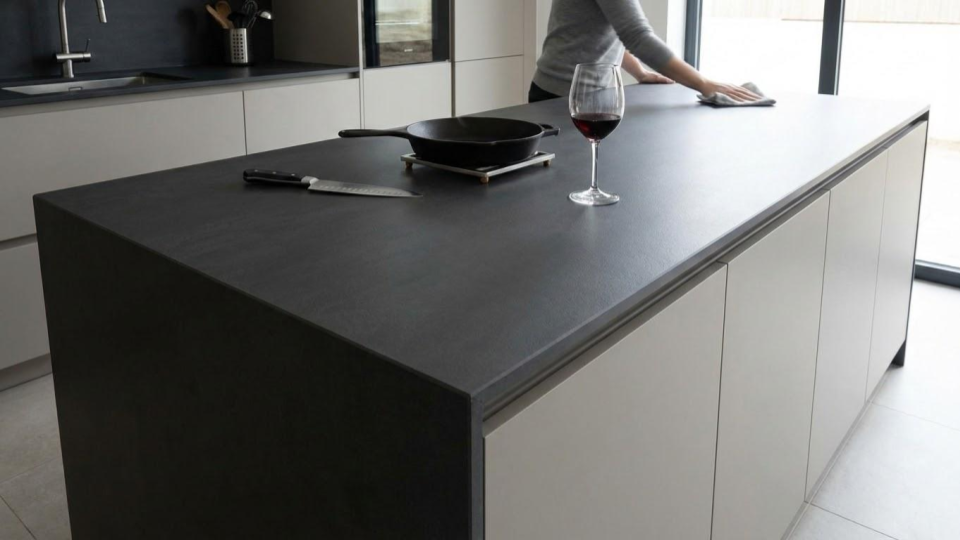
The newcomer. Minerals are fused under extreme heat and pressure to create a nearly indestructible surface.
Best For: The modernist who wants a thin profile and "bulletproof" durability.
Pros: Proof against almost everything: heat, scratches, stains, UV light, and ice.
Cons: Patterns are only on the surface (the edge is plain). Can chip on the edges if impacted. Expensive fabrication.
Approx. Cost: $65 – $130 per sq. ft. installed.
8. Laminate
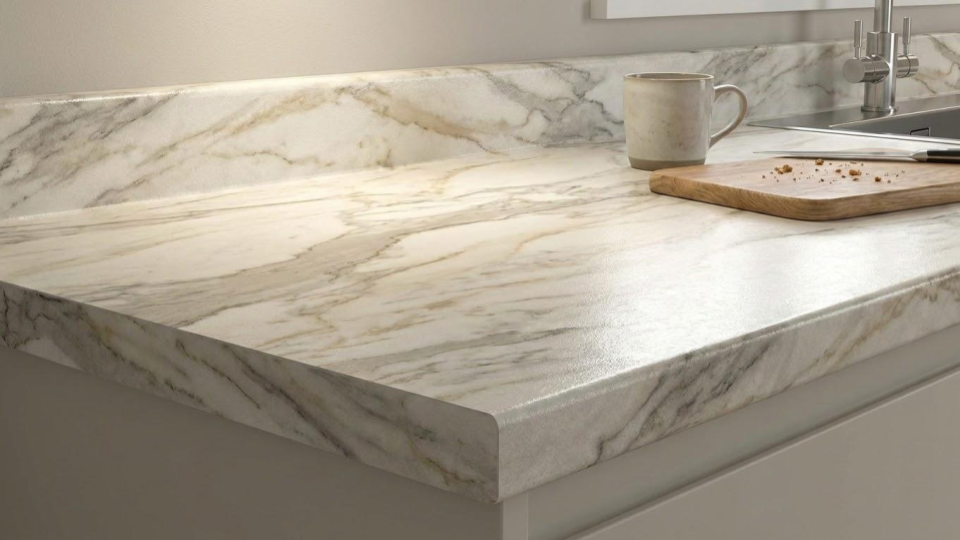
Layers of plastic bonded to particleboard.
Best For: Budget renovations, laundry rooms, or low-traffic areas.
Pros: Very affordable. Huge variety of colors. DIY-friendly.
Cons: Low resale value. susceptible to burns and scratches. Once the surface is breached, water will swell the particleboard underneath.
Approx. Cost: $20 – $50 per sq. ft. installed.
The Verdict: Fresh Start Designs’ Top Picks
If we are designing a kitchen for longevity and resale in the Pennsylvania market, these are the three we recommend most often.
1. Engineered Quartz
Why: It is the "set it and forget it" option. For 90% of families, the lack of maintenance and the stain resistance outweighs the lack of heat resistance. It looks clean, modern, and keeps looking new for decades.
2. Granite
Why: It remains the gold standard for durability. If you cook with high heat and don't want to worry about trivets, granite is superior to quartz. It offers a depth and movement that printed materials just can't mimic.
3. Soapstone
Why: This is my "Chef's Pick." It is virtually indestructible regarding heat and chemicals. It doesn't try to look perfect; it looks used and loved. In a farmhouse or historic Chester County home, nothing looks better.
The "Hard Pass": Materials to Avoid
Unless you have a very specific niche need, I generally advise my clients to steer clear of these three.
1. Tile (Ceramic or Stone)
Why: Grout. You cannot keep grout lines clean on a horizontal surface where food is prepared. It absorbs raw meat juices, stains from coffee, and eventually cracks. It provides an uneven surface for cutting boards and wine glasses. Just don't do it.
2. Concrete
Why: It was very trendy for a minute, but the reality is harsh. Concrete is extremely porous, stains if you look at it wrong, and is guaranteed to develop hairline cracks as the house settles. It is high cost for high anxiety.
3. Laminate
Why: While the price is right, it is a temporary solution. In a primary kitchen, it drags down the value of the home. One hot pan or one slip of a knife can ruin the surface permanently, as it cannot be repaired.
Ready to revive your kitchen? Choosing the material is just the first step. Let's look at your layout, your lighting, and how you live to create a space that works as hard as you do.

Robert Smith
FRESH START DESIGNS
Founder | Owner | Residential Designer
Location: Phoenixville, PA
Web: www.freshstartdesignsco.com
Phone: 610-624-2164
Email: revive@freshstartdesignsco.com