

The “VIF” Trap: Why It’s Time for Designers to Stop Passing the Buck
By Robert Smith Founder, Owner & Residential Designer | Fresh Start Designs
In the construction and design industry, there is a three-letter acronym that appears on almost every set of blueprints: VIF.
It stands for Verify In Field.
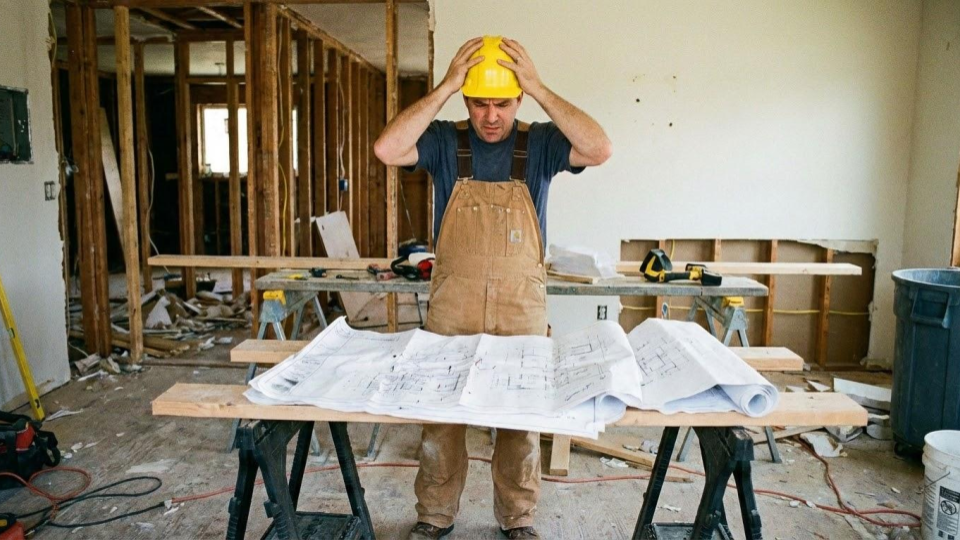
In theory, it is a harmless, prudent note instructing the builder to double-check a dimension before cutting expensive material. In practice, however, it has become one of the most abused crutches in our profession—a lazy shortcut that architects and residential designers use to absolve themselves of responsibility, shifting the burden of accuracy onto the builder.
At Fresh Start Designs, we believe a set of plans should be a roadmap, not a guessing game. It is time to have an honest conversation about when “Verify In Field” is necessary, and when it is simply a sign that your designer didn’t want to do their job.
The "Lazy" VIF: A Shift of Liability
Imagine hiring a tailor to make you a custom suit. They measure you, but on the pattern, they write a note to the person sewing the fabric: "Verify waist size before cutting."
If the pants don't fit, who is to blame? The tailor who measured, or the seamstress who was told to check the work?
This is exactly what happens on job sites every day. Too often, I see plans for renovations or additions where the designer has stamped "VIF" on clearly measurable elements—window rough openings, ceiling heights, or room widths.
Why do they do this?
To Avoid Site Visits: Accurate measuring takes time. It requires driving to the site, setting up lasers, crawling into crawlspaces, and getting dirty. It is easier to sit in an air-conditioned office, guess the dimension based on a photograph, and slap a "VIF" note on it to cover their tracks.
To Shift Liability: By adding this note, the designer is legally saying, "If this doesn't fit, it’s the builder’s fault for not catching my mistake." It turns the builder into the designer’s quality control manager.
When a designer uses VIF for something they could have measured, they are not protecting the client; they are protecting themselves at the client's expense.
The Real Cost of "Verify In Field"
When a builder encounters a "VIF" note on a critical dimension, the workflow grinds to a halt.
Consider a kitchen renovation. The plans show a bank of cabinets filling a specific wall, marked "VIF." The cabinet maker cannot order the boxes until the drywall is up and finished to get the "verified" dimension. This pushes the schedule back by weeks.
If the designer had taken the time to measure the existing framing and accounted for the drywall thickness in the drawings, those cabinets could have been ordered weeks earlier.
The overuse of VIF leads to:
Change Orders: When the field verification reveals the design doesn't work, the builder has to stop, request a redesign, and charge the homeowner for the delay and changes.
Builder Frustration: Good builders want to build, not audit the architect's work.
Budget Creep: "Unknowns" cost money. Minimizing unknowns is the designer's primary job.
When is VIF Actually Appropriate?
To be clear, there is a time and place for this note. Construction is an imperfect science, and we cannot see through walls (yet).
Legitimate uses for VIF include:
Hidden Conditions: When we are designing an addition and the connection point is hidden behind existing brick or drywall that cannot be demolished yet.
Excavation: We cannot know the exact depth of a footing until the earth is dug up.
Renovation Retrofits: When fitting a new steel beam into an old pocket where the masonry condition is unknown.
In these instances, VIF is a tool for collaboration. It signals to the builder: "We suspect X, but we cannot confirm until you open this up. Let's talk when you do."
The Fresh Start Philosophy
At Fresh Start Designs, we operate differently. I founded this company on the belief that the "design" phase includes the "discovery" phase.
If it can be measured, we measure it. If it can be verified, we verify it.
We don't just draw a pretty picture and hope it fits. We take the time to visit the site, verify the existing conditions, and produce drawings that are precise and buildable. If we put a dimension on a plan, it is because we have checked it. If we do use a VIF note, it is because we have exhausted every other option, not because we were too lazy to drive out to the site.
Your home is likely the largest investment of your life. You deserve a designer who takes the responsibility of accuracy seriously.

Robert Smith
FRESH START DESIGNS
Founder | Owner | Residential Designer
Location: Phoenixville, PA
Web: www.freshstartdesignsco.com
Phone: 610-624-2164
Email: revive@freshstartdesignsco.com