

The Case for Walls: Why the "Open Floor Concept" Needs to End
By Robert Smith Founder, Owner & Residential Designer | Fresh Start Designs
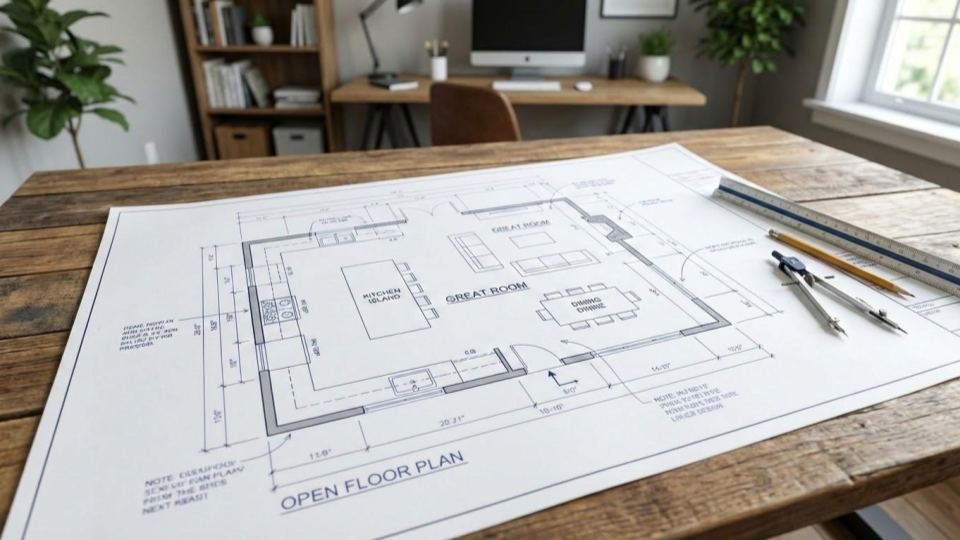
I’m going to be honest with you—I despise the open floor concept.
For the last two decades, every home improvement show, magazine spread, and real estate listing has sold us a specific dream: the sledgehammer swinging into drywall, the cloud of dust clearing to reveal a massive, undefined warehouse of a room where the kitchen, living room, and dining area blur into one. They call it "airy." They call it "entertainer-friendly."
But as a Residential Designer who has spent years walking through these echoing halls, I call it what it is: a design trend that has stripped our homes of character, comfort, and architectural integrity. It is time to stop tearing down walls and start rebuilding the soul of the American home.
The Origins: How We Got Here
To understand why we need to move on, we have to look at where this started. Historically, homes were compartmentalized for practical reasons—heating efficiency and noise control.
The shift began in the mid-20th century. Architects like Frank Lloyd Wright wanted to break the "Victorian box," connecting the indoors with the outdoors. By the 1950s and 60s, "ranch" style homes introduced the idea of the "family room" connected to the kitchen so mothers could watch children while cooking.
However, the trend exploded in the 1990s and 2000s with the rise of HGTV. Suddenly, "demo day" became a national pastime. Builders and realtors realized that removing walls made smaller square footage feel larger. It was a visual trick. We traded distinct rooms for the illusion of space, and in doing so, we lost something vital.
The Cost Reality: The Price of "Openness"
There is a misconception that fewer walls mean a cheaper house. In reality, achieving a true open floor concept is an engineering nightmare that drives costs through the roof.
1. The New Construction Premium Production and custom builders latched onto this trend, but to keep a ceiling flat across a 30-foot span without columns requires massive structural intervention. We are talking about heavy-duty LVLs (Laminated Veneer Lumber) or steel I-beams. That cost is passed directly to you.
2. The Remodeling Money Pit When clients come to me wanting to "open everything up," they often don't realize the domino effect. That wall you want to remove? It’s likely load-bearing. To remove it, we have to bury a steel beam in the ceiling, which means ripping out HVAC, rerouting plumbing stacks, and moving electrical runs. You are spending tens of thousands of dollars on structural engineering just to see your messy kitchen from your sofa.
The Death of Individuality
My biggest grievance with the open plan is strictly aesthetic: It kills design diversity.
When your kitchen, dining, and living room are one giant box, you are handcuffed to a single design aesthetic.
The Paint Problem: You cannot paint the dining area a moody navy blue and the kitchen a crisp white because there is no corner where the wall ends. You are forced to paint the entire first floor one color—usually a safe, boring "builder beige" or "agreeable gray."
Flooring Monotony: You can’t transition from a warm, hand-scraped hardwood in the den to a durable tile in the kitchen without it looking like a mistake. You are forced to run one material everywhere.
Trim and Finish Limitations: Where do you stop the crown molding? How do you treat the windows? Open plans make it impossible to start and stop features.
Bringing Back the Character of the Room
We need to return to the era where rooms had distinct identities. A home should be a collection of experiences, not a gymnasium with a sofa in it.
The Study/Den: Imagine a study with stained wood wainscoting, rich leather furniture, and a door that shuts. A place for quiet work or reading, separated from the clatter of the dishwasher.
The Dining Room: A dedicated dining room allows for drama. We can use coffered ceiling details, bold wallpaper, wainscoting, or a statement chandelier. It creates an atmosphere for dinner that feels special, distinct from the breakfast bar where you ate cereal that morning.
The Kitchen: The kitchen is a workspace. Historically, it was separated for a reason—to hide the mess, the smells, and the noise. Do we really want to watch the dirty pots and pans while we are trying to relax in front of the fireplace?
The Solution: "Broken Plan" Living and Cased Openings
So, if we don't open up the floor plan, but we don't want to live in a dark maze, what do we do? The answer lies in flow, not openness.
As a designer, I advocate for the "Cased Opening."
A cased opening is a wide passageway between rooms, framed with beautiful trim. It allows you to see from the kitchen to the family room, keeping the sightlines that parents love, but it keeps the rooms architecturally distinct.
Why this works:
Termination Points: A cased opening gives us a jamb and casing. This means I can wallpaper the dining room on one side and paint the kitchen on the other, and the transition looks intentional and elegant.
Structural Integrity: Keeping headers and partial walls creates natural support, reducing the need for expensive steel beams.
Acoustics: Leaving some wall sections helps dampen sound, so the blender in the kitchen doesn't drown out the TV in the living room.
Architectural Interest: We can add transoms above doors, pocket doors, or decorative columns. These elements add the warmth and "homely" feel that modern boxes lack.
A Fresh Start for Your Home
At Fresh Start Designs, we believe a home should embrace you. It should have corners, nooks, and distinct spaces that reflect different facets of your personality. Whether you are in Chester County, PA, or down in the Carolinas, we are ready to help you design a home that values character over trends.
Let's stop building warehouses and start building homes again.

Robert Smith
FRESH START DESIGNS
Founder | Owner | Residential Designer
Location: Phoenixville, PA
Web: www.freshstartdesignsco.com
Phone: 610-624-2164
Email: revive@freshstartdesignsco.com