

The Death of the Triangle: Why Your Modern Kitchen Needs "Zones," Not Geometry
By Robert Smith Founder, Owner & Residential Designer | Fresh Start Designs
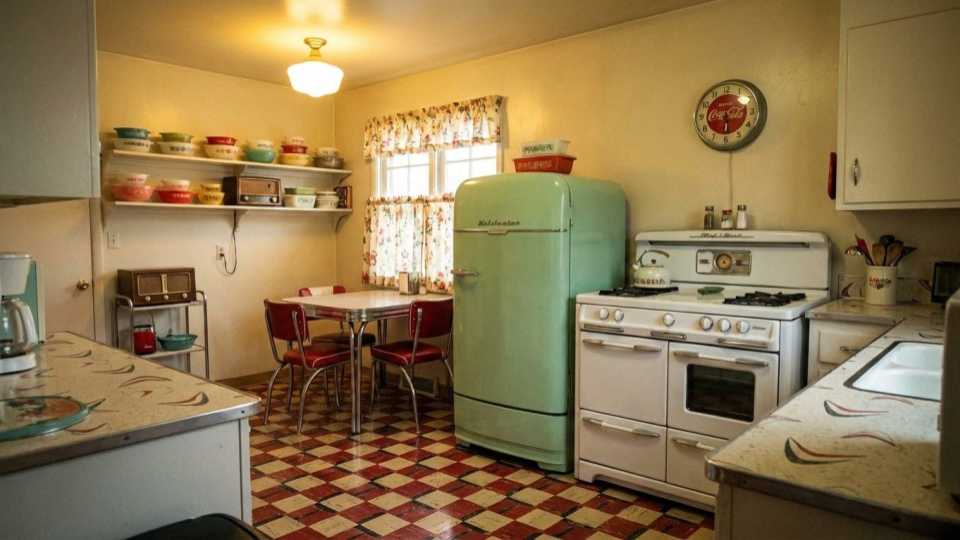
For decades, the "Kitchen Work Triangle" has been the golden rule of kitchen design. If you have spoken to a contractor or watched a home improvement show in the last fifty years, you’ve heard of it. The concept is simple: draw a line between your sink, your refrigerator, and your stove. These three lines should form a triangle, and the total distance should be efficient enough to walk but spacious enough to work.
It is a neat, tidy, geometric concept. It is also, for the vast majority of modern homeowners, completely outdated.
At Fresh Start Designs, we approach renovations differently. We don’t design for geometric perfection; we design for people. The modern kitchen has evolved into the hub of the home, a multi-functional living space that demands a new way of thinking. It’s time to retire the triangle and embrace the Work Zone.
A Brief History: Why the Triangle Existed
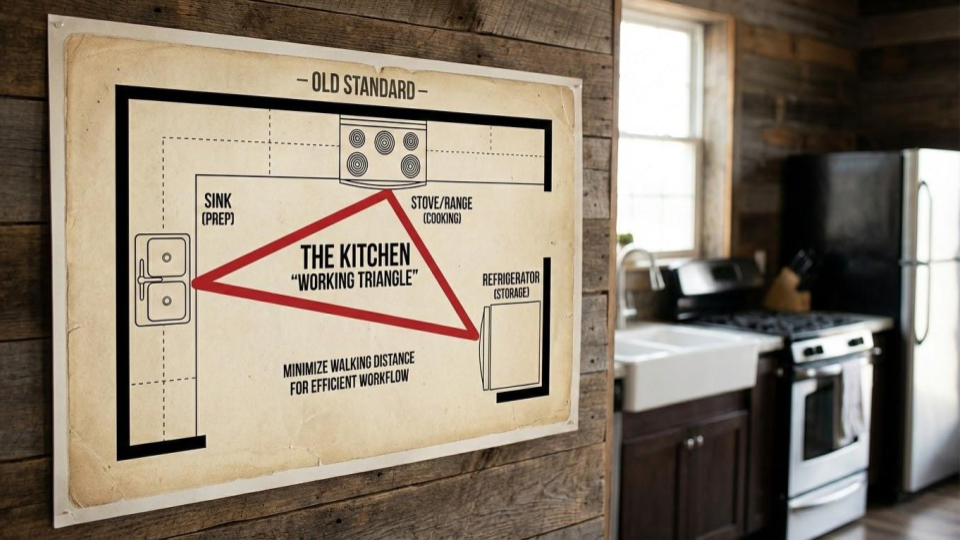
To understand why the triangle is outdated, we have to look at where it came from. The concept originated in the 1940s, formalized by the University of Illinois School of Architecture’s "Small Homes Council."
During this era, kitchen design was driven by Taylorism (industrial efficiency). The goal was standardization and reducing fatigue.
The Context: Kitchens were small, enclosed rooms separate from the living area.
The User: There was almost exclusively one cook (usually the housewife) preparing meals alone.
The Appliances: There were no dishwashers, no microwaves, no massive kitchen islands, and certainly no dual-fuel ranges or beverage centers.
In a 1940s kitchen, the triangle worked perfectly. It optimized steps for a single person moving between the icebox, the sink, and the oven. But ask yourself: Does that sound like your kitchen today?
Why the Triangle Fails the Modern Homeowner
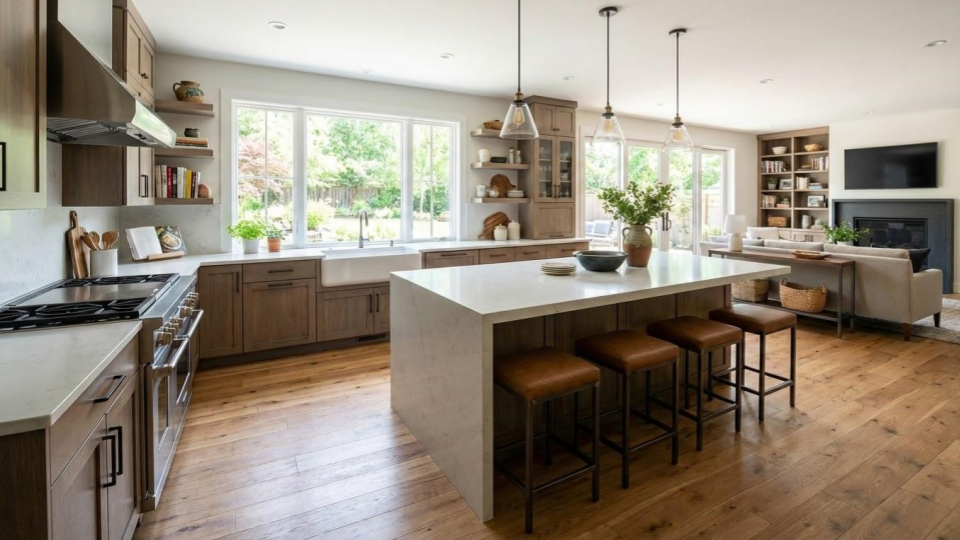
The "Work Triangle" fails today because our lifestyles have fundamentally shifted.
1. The Rise of the Open Concept
Kitchens are no longer hidden away. They are open to the family room and dining area. We have introduced islands that often sit right in the middle of where that old "triangle" line would be drawn. If you strictly follow the triangle rule, a kitchen island becomes an obstruction rather than a feature.
2. Too Many Cooks
The triangle assumes a solitary cook. Today, cooking is often a social activity or a shared chore. We have couples cooking dinner together, kids making snacks after school, or guests gathering around an island with wine while the host preps. If you stick to a strict triangle, traffic jams are inevitable. When paths cross, people bump into each other. A modern design needs to accommodate multiple people working simultaneously without friction.
3. Appliance Explosion
We simply have more stuff. The refrigerator, sink, and stove are no longer the only players. Where does the dishwasher go? The microwave drawer? The coffee station? The walk-in pantry? The trash pull-out? The triangle ignores these critical elements.
The Solution: Thinking in "Work Zones"
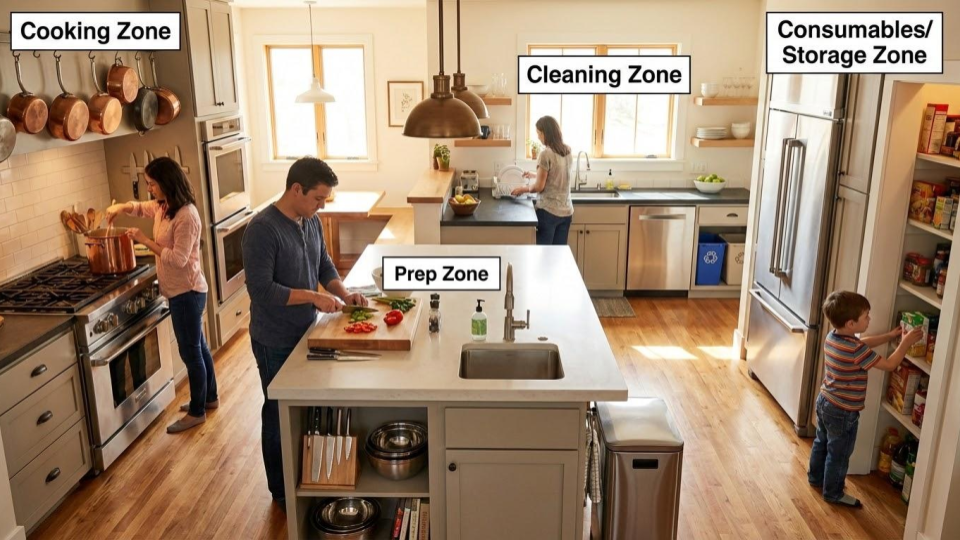
Instead of drawing lines, we need to draw zones. Zone-based design organizes the kitchen by task. This allows for better workflow, multiple cooks, and a kitchen that feels intuitive.
When designing a custom layout for a client in Chester County or the Carolinas, I typically look to establish these primary zones:
Prep Zone: This is the most used area. It needs ample counter space and easy access to knives, mixing bowls, and chopping blocks. Ideally, it is near a sink (or a prep sink) and the trash bin.
Cooking Zone: This centers around the range, cooktop, or wall ovens. It should have dedicated storage for pots, pans, and cooking utensils. It needs to be adjacent to the Prep Zone but distinct enough that someone at the stove isn't blocking someone chopping vegetables.
Cleaning Zone: This contains the main sink, the dishwasher, and the trash/recycling. Crucially, this zone should be kept out of the main cooking flow so that someone can load the dishwasher or wash hands without getting in the cook's way.
Consumables/Storage Zone: This is your refrigerator and pantry area. It should be easily accessible to the prep cook, but also accessible to the kids grabbing a juice box so they don’t have to walk through the "hot zone" (cooking area) to get it.
Top 3 Things to Consider When Renovating
If you are planning a remodel, don't just look at Pinterest. Look at your life. Here are the top three factors I discuss with every client:
1. Your Personal Workflow
How do you cook? Do you bake every weekend? Then you need a baking station with a lower counter height for rolling dough. Do you host large parties? Then you need an island designed for serving, not just prep. Don't design for a "standard" human; design for your specific habits.
2. Aisle Clearance and Traffic Patterns
This is where the "Zones" concept shines. We need to ensure that the refrigerator door can open without hitting the island, and that two people can pass each other comfortably. In a zone design, we widen aisles in high-traffic areas and ensure that "destination" spots (like the fridge) are accessible without crossing through the work zones.
3. Point-of-Use Storage
Stop storing things where they fit; store them where they are used.
Spices and oils go next to the stove.
Knives and cutting boards go in the Prep Zone.
Glasses and mugs go near the fridge or coffee maker.
Tupperware goes near the Cleaning Zone (where you package leftovers). Efficiency comes from having the right tool at your fingertips, not walking across the room to get a spatula.
What NOT To Do
As a designer, I see many kitchens that look beautiful but function poorly. Here is what to avoid:
Don't Ignore the Landing Zones: Every major appliance (fridge, oven, microwave) needs a counter space immediately next to or opposite it to set hot or heavy items down.
Don't Force an Island: Everyone wants an island, but if your kitchen is narrow, a peninsula or a galley layout is vastly superior. Forcing an island into a small space kills your workflow and creates "hip-bruiser" corners.
Don't Skimp on Lighting: A single overhead light casts shadows on your work surface. You need layers: recessed lights for general ambience, under-cabinet lighting for task work, and pendants for style and island illumination.
Conclusion
Your kitchen is the heart of your home. It shouldn't be dictated by a geometry rule from 1940. It should be dictated by how you live, how you entertain, and how you cook.
By shifting your mindset from "Triangles" to "Zones," you open up the possibility for a kitchen that is not only stunning to look at but a joy to work in. Whether you are in Southeastern PA or the Carolinas, your home deserves a design that works for you.
Ready to rethink your space?
If you are ready to move beyond the triangle and design a kitchen that fits your lifestyle, let's start the conversation.

Robert Smith
FRESH START DESIGNS
Founder | Owner | Residential Designer
Location: Phoenixville, PA
Web: www.freshstartdesignsco.com
Phone: 610-624-2164
Email: revive@freshstartdesignsco.com