
To Permit or Not to Permit? A Homeowner’s Guide to Renovating in Southeastern Pennsylvania
By Robert Smith Founder, Fresh Start Designs
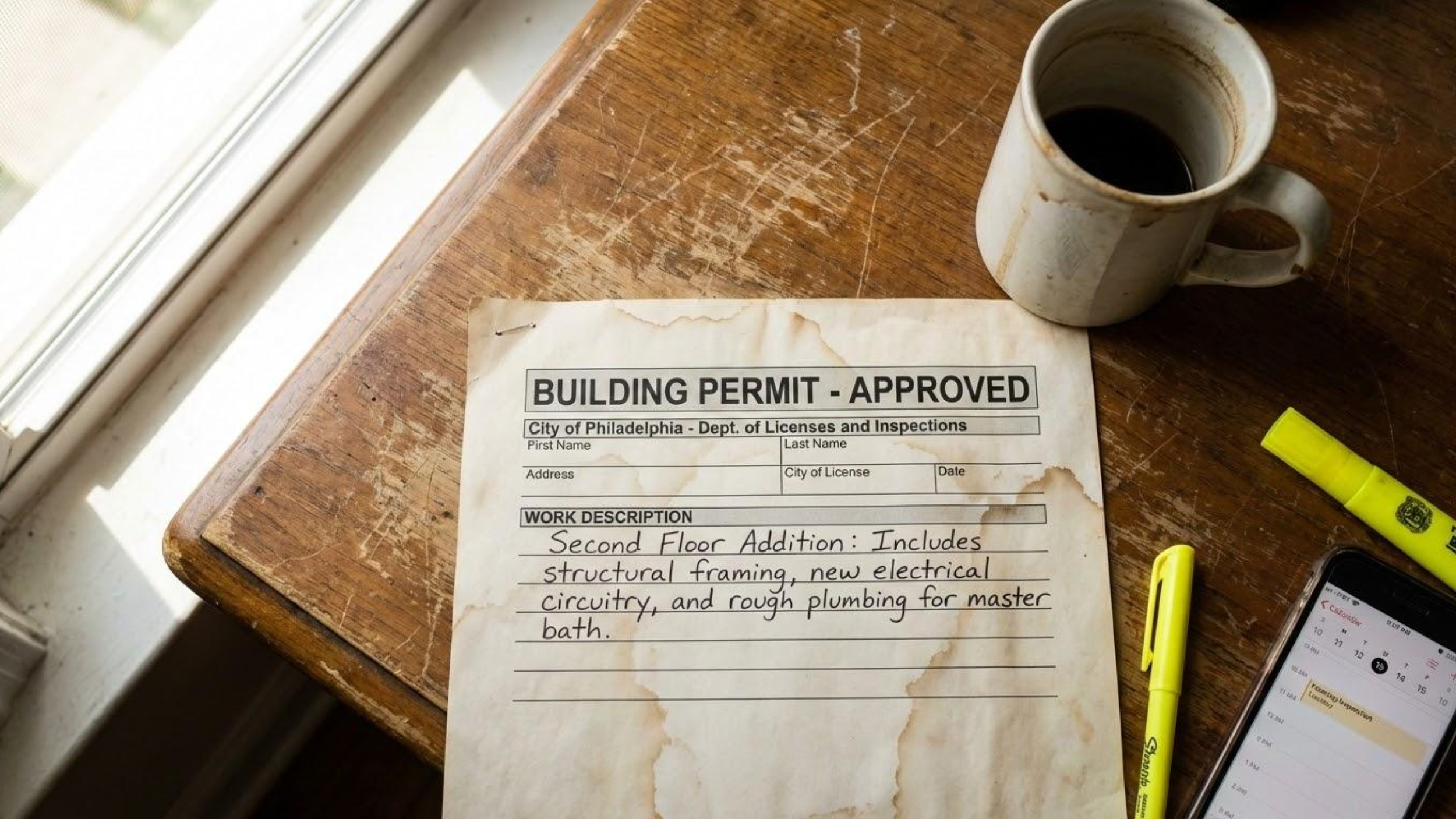
If you are a homeowner or general contractor in Southeastern Pennsylvania—from the historic blocks of Phoenixville to the growing neighborhoods of West Chester and Lansdale—you have likely asked yourself: "Do I really need a permit for this?"
It is the most common source of confusion in the home improvement world. Some view permits as a bureaucratic hurdle, while others worry that skipping them will create a "Budget Gap" or legal nightmare when it comes time to sell. As a Residential Designer focusing exclusively on the PA Uniform Construction Code (UCC), I see how these decisions impact the long-term value of a home.
Building permits are the Technical DNA of a safe renovation. They ensure that your "Architectural Surgery" is performed correctly, protecting your family and your investment.
The Rulebook: The Pennsylvania Uniform Construction Code (UCC)
In Pennsylvania, residential construction is governed by the UCC (34 Pa. Code § 403.62). While the state sets the baseline, local enforcement is handled at the municipal level.
Whether you are in Chester, Montgomery, Delaware, Bucks, or Lancaster County, the rule of thumb is this: If you are altering, repairing, or installing electrical, gas, mechanical, or plumbing systems, you likely need a permit.
When You Generally Do NOT Need a Permit
(The "Ordinary Repairs" Exemption)
The good news is that for many aesthetic updates, you can proceed without government oversight. The UCC classifies these as "ordinary repairs" or cosmetic work.
If your project stays strictly within these lines, you typically do not need to pull a permit:
Purely Cosmetic Updates: Painting, wallpapering, tiling (floors or backsplashes), or installing carpeting.
Cabinetry and Finish Work: Installing new kitchen cabinets or vanities. While these are often exempt from permits, they are the most common place for the 'Budget Gap' to appear. Even if the township doesn't need a plan, your contractor does. This is why our REVIVE Packages focus on 'Architectural Surgery'—maximizing your existing footprint without the permit-heavy cost of moving structural walls.
Like-for-Like Replacements: Swapping out an existing faucet, toilet, or sink for a new one in the exact same location. As long as you aren’t cutting into the wall to rearrange pipes or valves, this is usually exempt.
Minor Repairs: Stopping a plumbing leak, clearing a clog, or replacing a specific part of a faucet or valve.
The Caveat: "Like-for-like" is the key phrase. If you are replacing a standard tub with a whirlpool tub that requires new wiring, or swapping a gas stove for an electric range, that is no longer a simple swap—it is a system alteration.
When You ALMOST ALWAYS Need a Permit
In counties like Chester, Montgomery, and Delaware, enforcement is strict regarding safety systems. If you are doing a "true remodel"—gutting a bathroom, finishing a basement, or moving walls—you need a permit.
You should plan to apply for a permit if your project involves:
1. Structural Changes & Impervious Coverage
Removing or adding walls (even non-load bearing walls in some strict townships).
Changing the size of window or door openings.
Building additions or decks (especially those over 30 inches off the ground).
Removing or adding walls (even non-load bearing ones in strict townships). In Southeastern PA, particularly Chester and Montgomery counties, any addition that increases your home's footprint may also trigger Stormwater Management requirements. If you add more 'impervious surface' (roof/patio), the township may require a rain garden or seepage bed to handle runoff.
2. Plumbing Alterations
Relocation: Moving a toilet, sink, or shower to a different spot in the room.
New Lines: Running new piping for a wet bar, a new powder room, or a laundry relocation.
Replacements involving walls: If you have to open the wall to replace the valve (the mixing valve behind your shower handle), most townships require a permit because it involves the internal piping system.
3. Electrical & Mechanical Work
New Outlets or Lighting: Adding recessed lighting, new switches, or extra outlets.
Upgrades: Upgrading your electrical panel or service.
HVAC: Installing new ductwork or a new heating/cooling unit.
Ventilation: Adding a new bathroom exhaust fan where one didn't exist before.
4. New Spaces
Finishing a basement.
Adding a powder room or bathroom where one typically did not exist.
The 'Local Factor': City vs. Suburbs
Geography matters everywhere. For example, here in Philadelphia, requirements differ vastly from the quiet suburbs of Chester County. The same applies if you are in Charlotte vs. the outskirts. Always check your specific township's website.
Philadelphia: The city has specific requirements. Many bathroom and kitchen alterations require an "EZ Permit," a streamlined process for interior alterations that do not involve structural changes but do involve plumbing or electrical. However, these often must be pulled by a licensed contractor.
The Suburbs (Chester/Montgomery Counties): Some townships have amended the UCC to be stricter. While the state might say a "like-for-like" water heater replacement is a repair, some local fire marshals or building departments insist on a mechanical permit to ensure the gas line and venting are safe.
Pro Tip: Never assume your friend in King of Prussia has the same rules as you do in Malvern. Always check your specific township's website.
Why You Shouldn't Skip the Permit
I know permits cost money and take time. But as a Residential Designer, I advise against skipping them for three major reasons:
Safety: The primary goal of a code inspector is to ensure your house doesn't burn down or flood. They check that wires aren't crossed and pipes are vented correctly so sewer gas doesn't enter your home.
Resale Value: When you sell your home, you must disclose renovations. Savvy buyers (and their home inspectors) can spot unpermitted work. It can delay a sale or force you to pay for retroactive permits and fines.
Insurance: If a fire starts due to faulty wiring installed without a permit, your homeowner's insurance carrier may dispute the claim.
Contractor Accountability: A permit creates a 'Third-Party Verification.' When an inspector signs off on the framing or electrical rough-in, they are confirming the contractor followed the Technical Blueprints. It protects you from 'quick fixes' that don’t meet PA state code.
The Bottom Line
If you are just freshening up finishes, you are likely in the clear. But if you are opening walls or changing the footprint, you need a permit.
The First Step is a Strategic Feasibility Study. Don't guess if you need a permit or if your budget is realistic. Our $495 Feasibility Consultation provides a 90-minute on-site 'Forensic Discovery.' We review local zoning, identify potential permit hurdles, and provide a Strategic Feasibility Report with regional budget benchmarks.
Need a Permit Set? For custom homes, structural additions, or multi-generational VANTAGE Haven suites, we provide the high-density technical documents required for municipal approval.
Updating a Kitchen or Bath?: Even if the permit requirements are minimal, the design requirements aren't. Our REVIVE Flat-Fee Packages give you the 'Build-Ready' plans that ensure your contractor and the inspector are on the same page.

Robert Smith
FRESH START DESIGNS
Founder | Owner | Residential Designer
Location: Phoenixville, PA
Web: www.freshstartdesignsco.com
Phone: 610-624-2164
Email: revive@freshstartdesignsco.com